The Cihuateteo by Anne Key

Goddess, Mesoamerican Goddesses, Mexico, Priestess, ritual

The cosmology of the Mesoamericans presents a lush, complex landscape of deities and ideas. Study of this cosmology, through a particularly feminist lens, reveals powerful female deities. Among the most intriguing are the Cihuateteo[1].

The Cihuateteo (literally “women goddesses”)[2] appear in the pantheon of Mesoamerican cosmology as mortal women who died in childbirth and were then deified[3]. In regular cycles, the Cihuateteo traversed the heavens, the underworld, and the earthly plane. Daily they dwelt with the stars in the western sky in the heavenly region called Cihuatlampa (“place of women”) and accompanied the sun from noon to sunset, then through the night as it lit the underworld[4]. Every 52 days[5] in the ritual calendar[6], the Cihuateteo descended to earth to reign for a day associated with the west. It is the very regularity of the Cihuateteo’s presence that places them habitually in the lives of the Mesoamericans.

In central Mexico, Goddesses were worshipped at cihuateocalli (“goddess houses”) of different sizes and locations. The Cihuateteo were honored in neighborhood cihuateocallibuilt at the crossroads. During the days of the Goddesses’ descent, their images in the shrines were festooned with paper (amatetéuitl) pegged to the statues with bits of rubber or copal[7]. They were given offerings of tamales[8] and toasted corn, as well as bread shaped as butterflies and lightning rays.

On the days the Cihuateteo descended, children were cautioned to stay inside and men were warned to be careful, as contact with these Goddesses could cause palsy. These admonitions have historically been used to paint the Cihuateteo as maleficent beings. I offer another interpretation, seeing the days they descended as times when possession was imminent and viewing palsy as a symptom of possession. Only those who were skilled in dealing with divine possession should be outside on the days the Cihuateteodescended.

The negative framing of these Goddesses has led to their continued demonization. Modern writings compare them to vampires and other maleficent specters. However, according to the veneration practices of the Mesoamericans, the Cihuateteo are powerful, benevolent and munificent ancestors.

One of the most beautiful tributes to the Cihuateteo was the prayer that the midwife recited at the death of a young mother.[9] In this prayer the midwife cried at the death of her patient, urging the parents to be glad that their child had died in childbirth because she would become a Goddess and accompany the sun as a brave one, a mocihuaquetzque[10]:

My little one, my daughter, my noble woman, you have wearied yourself, you have fought bravely. By your labors you have achieved a noble death, you have come to the place of the Divine. …Go, beloved child, little by little towards them (theCihuateteo) and become one of them; go daughter and they will receive you and you will be one of them forever, rejoicing with your happy voices in praise of our Mother and Father, the Sun, and you will always accompany them wherever they go in their rejoicing. (Sahagún 381-382)

At the end of the prayer, the midwife exhorted the new Cihuateotl not to forget her and all those left on earth, to remember and aid them as they led their hard lives on the earthly plane. This prayer portrayed the Cihuateteo as benevolent beings, honored and revered.

Throughout this prayer, the Cihuateteo were referred to in militaristic terms. They were called “brave” and extolled for “fighting bravely”, and their daily journey with the sun from noon to dusk mirrored the slain warrior’s journey with the sun from dawn to noon. The Cihuateteo were literally the embodiment of bravery. In fact, warriors would attempt to sever the middle finger of the dead woman’s left hand to use as a talisman to assure their own bravery and success in battle. The midwives and family members who carried her to her grave had to stop warriors from dismembering the body of the Cihuateteo.

The question of why the Cihuateteo were described in militaristic terms and venerated in the same way as warriors who died in battle has been much debated. Melgarejo Vivanco wrote that the Cihuateteo were given the same honor as dead warriors because it helped promote motherhood “with the incentive of deification” (167). A militaristic society, he noted, must be supplied with soldiers. This is a commonly repeated theory.

statue of goddess (Cihuateteo) with skeletolized face and clawed fingers

Cihuateotl. Provenance: Mexico City. Note the skeletolized face and clawed fingers (clawed toes not visible). Belt around waist has similar ollin style knot.
Photo © Anne Key.

However, honoring women by comparing them to warriors assumes that warriors had died in battle before women died in childbirth[11]. I suggest that the scenario of the Cihuateteoexisted before the culture knew war[12], and that the increasingly militaristic Mesoamerican society may have co-opted a longstanding custom of honoring women who died in childbirth to valorize its practices.

It can then be posited that warriors were given the same status as women who died in childbirth; that as an incentive for warriors to go into battle, they were to be honored as women had been honored for centuries, perhaps millennia. Women dying in childbirth were the exemplars of courage, given the highest honor available to mortals — to journey with the sun. Warriors would share this honor, giving them the same status as the Cihuateteo.

The iconography associated with the Cihuateteo differs in the various regions. TheCihuateteo statues from the state of Veracruz were modeled after the deceased bodies of individual women who died in childbirth. Multivalent symbols appear on these statues: fantastic headdresses represent the sky dragon and the earth monster; bicephalic pit-vipers wrapped around their waists represent internal female organs and attributes of deities associated with death. The vipers are tied in a knot similar to the glyph ollin, which means “movement”.

The most striking aspect of these statues is their humanness. These were real women — the artisans’ contemporaries, possibly their relatives, friends, part of their community. They were rendered as fleshy, corporeal, mortal, real. Every post-mortem detail was captured. I believe it is this humanness that makes these statues a true testament to the deceased women — they were truly revered ancestors.

In contrast, the Central Mexican Cihuateteo do not have individual characteristics; there is little variance among them. These statues are kneeling and have descarnated faces and clawed feet, contrasted with their long, luxurious hair. On the top of some of their heads, a day glyph of one of the days of the Cihuateteo’s descent is designed into the hair. Their belts or snakes are tied in the similar ollin glyph style knot. Their breasts are bared, visible above their knotted belts and skirts.

The Cihuateteo were the beloved and brave women who died in the act of childbirth. The midwife’s prayer assured the mother that her death had not been in vain, that she would be remembered for her act of bravery. The prayer poignantly expressed the bravery of the Cihuateteo, showing their honored place with the sun. There was no doubt that the Cihuateteo were powerful deities. Traversing the celestial, earthly, and underworld spheres and honored in neighborhood shrines, they were an integral part of the spiritual landscape of the Mesoamericans.

_______

Join us on a Sacred Tour of Mexico! 6/26-7/3/2016 Tour sacred sites in and around Mexico City with Veronica Iglesias and Anne Key, both priestesses and scholars of Mesoamerican culture.Learn about thirteen of the Nahua Goddesses, participate in rituals, a temazcal (a Mexican sweat lodge), enjoy guided tours through world-class museums and shopping at an art bazaar. Plus lots of wonderful surprises! Some of the sites we will visit: Teotihuacan, Basilica de Guadalupe, Tepotzlan, Museo de Antropologia, Templo Mayor, Casa de Frida Kahlo, and many more! more info at  http://www.goddess-ink.com/events.html

Notes

  1. All translations from the Spanish or Nahuatl are mine.
  2. Cihuateteo (pl); Cihuateotl (sing).
  3. See Pomeroy for speculation that Spartan women who died in childbirth were also honored in the same way as warriors slain in battle.
  4. The underworld portion of this cycle is not explicitly stated in Sahagún’s writings but can be found elsewhere. See Key for evidence and sources.
  5. The 260-day ritual year was divided into 20 time periods called trecenas (from the Spanish trece meaning 13) made up of 13 days each. There were four sets of trecenas, each associated with one of the four directions. So in the whole 260-day cycle, five individual trecenas were associated with a single direction. The Cihuateteo descended on the first day of each trecena associated with the west: the 3rd, ce mazatl (one deer); the 7th, ce quiahuitl (one rain); the 11th, ce ozomatl (one monkey); the 15th, ce calli (one house); and the 19th, ce quauhtli (one eagle).
  6. It has been suggested that this 260-day ritual cycle follows the human gestation period from the first sign of life to birth (covering 9 lunations) and is intricately associated with female cycles. See Tate for further information.
  7. Copal is a fragrant tree resin burned in ritual. It is still used today.
  8. Tamales are still considered sacred food, made and served on feast days. Tamales represent the human body: the masa (corn dough) is the skin, the meat is the muscle, and the red sauce is the blood.
  9. Many prayers and rites of the Aztecs were recorded by B. Sahagún, one of the first clerics to arrive in Mexico from Spain. He recorded the Prayer of the Midwife in a romanized version of the indigenous oral language Nahuatl. Though his writings are certainly infused with a Catholic overlay, they are one of the few extant sources for pre-conquest rituals, prayers, and beliefs. For a beautiful rendition of many of the sacred sayings and prayers, see Sullivan and Knab.
  10. This term is sometimes translated as “brave ones”, “valiant women” or “female warriors” and other times as “those that arose as women”. See Miller and Taube and Klein.
  11. Rohrlich and Nash find “no evidence of gender and class distinctions, or of warfare, before the latter part of Toltec hegemony” (p. 93), possibly as late as 900 CE. However, more current scholarship by Marcus finds signs of warfare in the Oaxaca area by 700-500 BCE. According to Marcus, from 1400 to 1150 BCE the society was egalitarian, with families “integrated through participation in village ritual” (p. 2). However, signs of hereditary inequality began appearing in 1150 BCE, and by 700-500 BCE, warfare was evident.
  12. de Piña Chán speculates that the Cihuateteo date from the Formative era but that they do not appear in statuary until the Classic era on the Gulf Coast (p. 152).

Works Cited

  • Key, Anne. Death and the Divine: The Cihuateteo, Goddesses in the Mesoamerican Cosmovision. Diss. California Institute of Integral Studies, 2005.
  • Klein, Cecilia. “The devil and the skirt: An iconographic inquiry into the pre-Hispanic nature of the Tzitzimime”. Ejournal: Revista estudios de cultural Náhuatl. 31 (2000): April 20, 2003, http://www.ejournal.unam.mx/cultura_nahuatl/ecnahuatl31/ECN31002.pdf.
  • Marcus, J. Women’s Ritual in Formative Oaxaca: Figurine-making, Divination, Death, and the Ancestors. Ann Arbor: University of Michigan Press. 1988
  • Melgarejo Vivanco, J. L. Los Totonaca y su cultura [The Totonacs and their culture]. Xalapa, Mexico: Universidad Veracruzana. 1985.
  • Miller, Mary and Karl Taube. The Illustrated Dictionary of The Gods and Symbols of Ancient Mexico and the Maya. New York: Thames and Hudson. 1993.
  • de Piña Chán, Beatriz.B. “ Elementos psicopompos en la arqueología mexicana [Psychopomp elements in Mexican archaeology]”. Ed. H. K. Kocyba, Y Gonález Torres, & R. Piña Chán Historia comparativa de las religiones Mexico City, Mexico: INAH. 1988. 145-168.
  • Pomeroy, Sarah B. Spartan Women. New York: Oxford University Press. 2002.
  • Rohrlich, R., & Nash, J. “The patriarchal puzzle: State formation in Mesopotamia and Mesoamerica”. (No publication information available.) 1981. 90-95.
  • Sahagún, Bernardino. Historia general de las cosas de nueva españa. Transl. A.M. Garibay K. Mexico City: Editorial Porrúa. 1999.
  • Sullivan, Thelma D. and Timothy J. Knab. A Scattering of Jades: Stories, Poems, and Prayers of the Aztecs. Tucson: University of Arizona Press. 2003.
  • Tate, Carolyn. “Writing on the Face of the Moon”. Manifesting Power: Gender and the Interpretation of Power. Ed. Tracy Sweely. New York: Routledge. 1999. 81-102

Graphics Credits

  • Cihuateteo, photos © 2008 Anne Key. All rights reserved.

This post appeared originally in Matrifocus www.matrifocus.com

Tlaltecuhtli: The Jaws of Life and Death by Anne Key

Goddess, Mesoamerican Goddesses, Mexico, Priestess, ritual, sacred sites

In 2006, another giant monolith was found at the Templo Mayor in Mexico City. Like the Coatlicue monolith found decades earlier, this new discovery also towers at over seven feet tall. She is Tlaltecuhtli, the Earth Goddess.

Images of Tlaltecuhtli are often found carved on the bottom of Aztec sculptures — where the sculpture comes in contact with the earth. The most famous of these images is the one on the bottom of the giant Coatlicue from the Templo Mayor in Mexico City. Representations of Tlaltecuhtli are found at the murals of Teotihuacan, a ceremonial center near modern-day Mexico City.

Her name literally means “earth-lord” (Tlal =land; cuhtli = lord).[1] While the suffix of her name connotes male gender, she appears in myth as female and her pictorial representation is decidedly female, usually in the birth-giving posture. Midwives prayed to Tlaltecuhtli in the cases of difficult birth. Also she was invoked as the Sun in prayers to another Aztec deity, Tezcatlipoca (Miller 168). Tlaltecuhtli is the Earth Goddess, part of the Central Mexican pantheon, and her image stretches into the Mayan territories.

Image and Meaning
One of Tlaltecuhtli’s most distinctive features is her gaping maw, showing flint knives[2] for teeth and a protruding tongue. Her hands and feet are often clawed, bringing to mind both predatory birds and carrion-eaters. Here she is pictured with skull masks at her elbows and feet as well as in her hands. Her birth-giving posture connects her to frog imagery.


Tlaltecuhtli, Templo Mayor, Mexico City

The open mouth of the Tlaltecuhtli can be seen as a tomb — or as a womb. On the first page from the Tonalámatl de los Pochtecas the Earth Goddess appears, jaws wide, teeth exposed. Out of her mouth grows the tree of life. The tree of life growing from these jaws of death completes this picture of the earth as womb and tomb, and of the mouth and eating as analogous to birth and death.

Images of the Earth Goddess appear in Maya iconography as well. In the Mayan ceremonial complex of Izapa, Stele 25 shows the Earth Goddess as a crocodile, arranged vertically, pointing headfirst towards the ground with her tail becoming a tree.[3] These are two beautiful symbols of the creative force of the earth as represented by the Earth Goddess, connecting her with trees, the firmament, and the act of creation either out of her own mouth or with her own body. The Izapan style Earth Goddess represents the earth and death and the “dynamics between death and birth that govern the universe”, according to De la Garza (2002, p. 98), who identifies the symbolism of the Earth Goddess or, as she terms it, the “Terrestrial Dragon” as linking life and death:

Considering its relationship with the earth, the dragon symbolized the earthly surface, as well as the generating power hidden inside. Thus it is linked with the death god who dwells there, the jaguar, who is a symbol of the dead Sun, the netherworld, and the night sky.(122)

The Earth Goddess resembles a crocodile here but has also been identified in both English and Spanish interpretations as a variety of beings: snake, alligator (caimán), crocodile or lizard (lagarto or lagartija), dragon, and mythical monster/creature. Whatever species, mythical or real, that the Earth Goddess represents, she unites both telluric and aquatic aspects.

The image of the caimán corresponds to the day-sign Cipactli. Ce Cipactli (one-caimán), is the first day of the 260-day ritual calendar. As the ritual calendar can represent the cycle of human life, Cipactli represents the beginning of life. Tlaltecuhtli is the maw of life and death, the mouth that is womb and tomb. And as we will see in the following myth, she is the incarnation of the earth.

Myth
The Earth Goddess is associated with the very creation of the earth. She stands as a symbol of telluric creation and as a symbol of the creative capacity of the earth. In myths and the codices, the Earth Goddess in her form as Cipactli literally becomes the earth; she is a primordial sea creature whose dismembered body forms the earth.

From the 16th century manuscript Histoyre du Mechique comes the myth of the creation of the earth (Markman 213). In this myth, the two gods Quetzalcoatl and Tezcatlipoca carried Tlaltecuhtli from heaven to earth. When they arrived on earth, they found it covered with water and realized they needed to create land. The two gods changed themselves into two snakes and seized Tlaltecuhtli by the hands and feet and pulled her with such force that she was severed. Her body from her shoulders down became the earth, and from the shoulders up it became the heavens.

The other deities were extremely upset by the actions of these two gods. In order to recompense Tlaltecuhtli, all the gods arrived on earth to console her and deemed her the source of all sustenance:

And in order to do this, they made from her hair trees and flowers and grasses, from her skin the very fine grass and small flowers, from her eyes wells and fountains and small caverns, from her mouth rivers and great caverns, from her nose mountain valleys, and from her shoulders mountains. And this goddess sometimes wept at night, desiring to eat men’s hearts, and would not be quiet until they were offered to her, nor would she bear fruit unless she was watered with the blood of men. (Markman 213)

This myth has a blatantly misogynistic overlay, possibly from the original manuscript by a Spanish chronicler (which has since been lost) or by the French translator, or by the orator himself. Certainly this view is limited: The earth as an unwilling participant in creation and the reciprocal relationship of human to earth as based in sadness and anger.

However, the underlying storyline shows Tlaltecuhtli as the earth; the earth is literally the Goddess incarnate. Her body is the contours of the land, and all nourishment and sustenance come from her. Commenting on this myth, Carrasco likens the theme of dismemberment to the act of creation: “This combination of dismemberment and creation is an emphatic characteristic of Mesoamerican mythology. The creation of the world is constantly joined in the destruction of the world in mythic narratives” (440). Viewed through a different lens, one where the dismemberment happens willingly, the earth is the gift of the Goddess, and the reciprocal sacrifice that humans offer is their gift to her.
Báez-Jorge sees the Earth Goddess as the center of a quadripartite group of deities: Cóatlicue as the origin of the celestial deities; Chicomecóatl as the provider of sustenance; Cihuacóatl as motherhood and death;and Chalchiuhtlicue as controlling terrestrial waters. In the center is the Earth Mother, the “sacred essence that incorporates the totality of the numinous characteristics that are dialectically linked (human fertility and vegetation; life and death; phases of the moon, etc.) and in turn that which is realized by an internal connection that unifies these distinct responsibilities” (132-133).

The Jaws of Life and Death
Tlaltecuhtli is the earth incarnate, the in-carn-ation of the earth; the earth made flesh. The Earth Goddess embodies the duality of creation and death. The Goddess has her mouth open to give and receive in reciprocal relationship with those who dwell in her.

A song from the Nahua peoples of San Miguel in Sierra del Puebla beautifully portrays this relationship of earth and human. The earth, the most holy earth, is the source of life for the people of San Miguel. As they themselves say here:

We live HERE on this earth (stamping on the mud floor)
We are all fruits of the earth
The earth sustains us
We grow here, on the earth and lower
And when we die, we wither on the earth
We are ALL FRUITS of the earth (stamping on the mud floor).
We eat of the earth
Then the earth eats us. (Broda 107)

_________

Join us on a Sacred Tour of Mexico! 6/26-7/3/2016 Tour sacred sites in and around Mexico City with Veronica Iglesias and Anne Key, both priestesses and scholars of Mesoamerican culture.Learn about thirteen of the Nahua Goddesses, participate in rituals, a temazcal (a Mexican sweat lodge), enjoy guided tours through world-class museums and shopping at an art bazaar. Plus lots of wonderful surprises! Some of the sites we will visit: Teotihuacan, Basilica de Guadalupe, Tepotzlan, Museo de Antropologia, Templo Mayor, Casa de Frida Kahlo, and many more! more info at  http://www.goddess-ink.com/events.html

Notes

  1. All translations from the Spanish are mine.
  2. As the primary means of striking fire, flint was symbolic of the debt humans owed to the deities for sustenance and life. Flint knives were associated with sacrifice and were often personified, adorned with eyes and mouths.
  3. For a fuller treatment of this stele, see de la Garza 2002.

Bibliography

  • Báez-Jorge, F. (1988). Los oficios de las diosas [The offices of the goddesses]. Xalapa, Mexico: Universidad Veracruzana.
  • Broda, J. (1987). “Templo Mayor as Ritual Space”. In J. Broda, D. Carrasco, and E. Matos Moctezuma The Great Temple of Tenochtitlan: Center and Periphery in the Aztec World. Berkeley: University of California Press, p. 61-123.
  • Carrasco, D. (1995) “Cosmic Jaws: We eat the Gods and the Gods Eat Us.” In Journal of the American Academy of Religion. Vol. 63. No. 3, pp. 429-463.
  • Coe, M. D. (1997). Mexico: From the Olmecs to the Aztecs. New York: Thames and Hudson.
  • Garza, M. de la. (1998). El universo sagrado de la serpiente entre los Mayas [The sacred universe of the serpent according to the Mayas]. Mexico City, Mexico: Universidad Nacional Autónoma de México.
  • Markman, R. and P. Markman (1992). The Flayed God: The Mesoamerican Mythological Tradition. San Francisco: HarperSanFrancisco.
  • Miller, M. and K. Taube. (1993). An Illustrated Dictionary of The Gods and Symbols of Ancient Mexico and the Maya. London: Thames and Hudson Ltd.
  • Pasztory, E. (1998). Pre-Columbian Art. Cambridge, U.K.: Cambridge University Press.
  • Sahagún, B. (1999). Historia general de las cosas de nueva España [General history of things of New Spain] (A. M. Garibay K., Trans.). Mexico City, Mexico: Editorial Porrúa. (Original work published 1829; written in the 16th century)
  • Tate, Carolyn. “Writing on the Face of the Moon”. Manifesting Power: Gender and the Interpretation of Power. Ed. Tracy Sweely. New York: Routledge, 1999. 81-102. Challenging Secularization.Aldershot, UK and Burlington, VT: Ashgate.

Graphics Credits

Spring Equinox

Goddess, Priestess, ritual, spring equinox

Spring Equinox 2016

Today is the Spring Equinox, when the northern and southern hemispheres are bathed in equal light. It is a day to search for balance within and without.

The bright green leaves are unfurling from the trees, our rose bush has sprouted leaves, and a few of the irises are budding. I feel overwhelmed and light-headed at the growth all around me. Frankly, I find it very difficult to find any balance this time of year, with all of these new buds, both physical and metaphorical, calling my attention to their promise of beautiful blossoms.

But don’t let this day pass you by. Take a moment of silence and stillness to discern: which blooms should be watered and tended? Which need to be “weeded” out? When we find the stillness within, everything comes into focus.

Bright Blessings to you! — Anne

More about Spring Equinox: Spring Equinox is often called Ostara, or Eostre, named for a goddess of Germanic origin who is the namesake of Easter. For the Northern Hemisphere, Spring Equinox is Mid-Spring, signaling the height of the season, occurring at 1° Aries in Tropical system. History and ritual ideas: http://www.schooloftheseasons.com/spring.html  and I love these! http://www.craftster.org/forum/index.php?topic=377863.0#ixzz3SUztkDAp&i

Reviewing the To-Do List by Genevieve Mitchell

contemplation, Divine, Goddess, ritual, Uncategorized

shutterstock_349499291How many things are on your to do list?  What pieces of your life have you left unattended because of the myriad demands on a daily basis?  I had the blessed opportunity to spend a day yesterday, just pondering, sitting, wondering, reviewing.   I spent some time evaluating 2016 intentions and how well I am doing.  I have ten areas of my life I am trying to attend to on a regular basis (ex:  Connection with Divine, healthy me, relationships, work, etc.).  I am able to say I was doing well (8 or 9 on a scale of 10) on some, and only a 5 or 6 on others.  But taking time to review my intentions allowed me to remember all the big hopes I had for 2016.
Fortunately we have 8 more months of 2016, but I want to make sure I spend time doing things that are important, that have value, that will add blessing, grace and light to my life.  I like this quote by Socrates “Wisdom begins with wonder”.  I think taking time to wonder, to ponder and to contemplate certainly allows me better direction and clarity than just charging forward each day with the many tasks in front of me.

What about you?  Have you taken time to envision your ideal world, so you can begin taking steps to put it in place?  I invite you to share how you do your review and how it works for you.  Bright Blessings.

Genevieve Mitchell is Partner at Goddess Ink Publishing.  For More information and to follow Goddess Ink Blog visit www.goddess-ink.com  or visit us on Facebook at https://www.facebook.com/goddessinkbooks/

New Book Release: Goddesses of the Americas by Lydia Ruyle

Divine, Goddess, Goddess Banners, Goddesses of the Americas, Lydia Ruyle, Priestess, ritual, sacred sites, Uncategorized

Front Cover Low Res

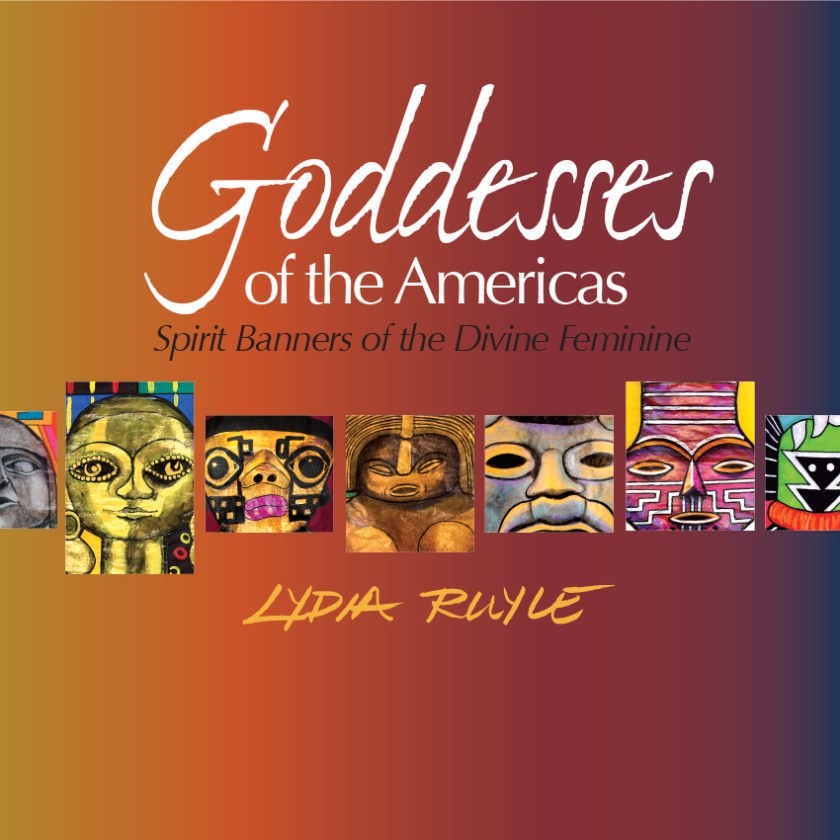
Goddess Ink is so proud to announce publication and pre-sale of Lydia Ruyle’s latest book, Goddess of the Americas: Spirit Banners of the Feminine Divine.  This 150 page, full color book features banners and descriptions of over 75 Goddesses and Divine Feminine figures. Accompanying each banner is a description and historical information on each figure. The rich colors and unusual layout make this book a treasure for both the heart and the mind.


“Lydia Ruyle’s goddess banners are a joy to behold!  In Goddesses of the Americas, image, symbols, description and place of origin the Americas tell us about each goddess. It is a full-color experience that can be savored.  At the very end of there is a photograph of Lydia in a hallway at the Parliament of the World’s Religions, standing between her goddess-banners that line both sides of the hall. Walking that hallway was like going through the pages of this book, an affirmation of the sacred feminine as embodied and experienced.  “Jean Shinoda Bolen, MD, Author of  Goddesses in Everywoman

Save 20% ! Pre-order before 3/19 (book will ship 4/5).  For information and purchase visit www.goddess-ink.com

Mexico City–Land that calls my heart by Anne Key

Divine, Goddess, Mexico, Priestess, ritual, sacred sites, Uncategorized

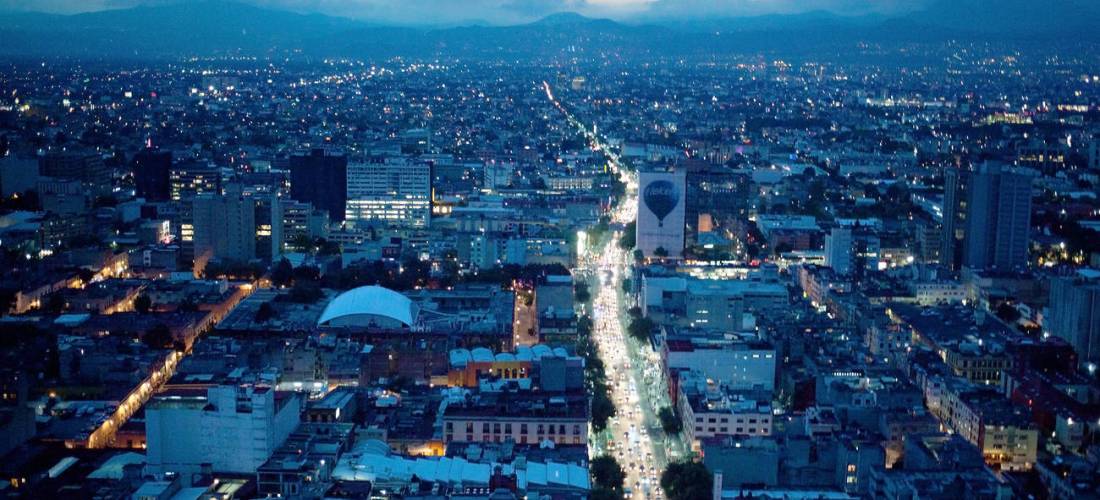
In 1988 I went to visit my sister and fell under the enchantment Mexico City. One of the largest cities in the world (and the largest in the Americas), Mexico City has everything I love: world-class museums, fine restaurants, hearty street-food, extensive subway, gracious and expansive parks, exquisite architecture, and staggering art. I have traveled through Mexico City annually since that first trip, sometimes for research and other times to nourish my soul.

The opportunity to bring others to this city is a joy. Over the years, I have seen Mexico City change. The air pollution (once a major health concern) has cleared measurably. The creation of more pedestrian walkways in the Historic District have led to an explosion of sidewalk cafes. The excavations at Templo Mayor in the Zocalo (center of the city) have yielded more colossal Goddess statues (the latest an 11 x13 foot Tlatecuhtli).  

Mexico City sits in a valley ringed by mountains, known as the Valle de México. The area has been continuously inhabited from 8,000 BCE. The Aztecs made this area their capital in 1325 CE, with over 200,000 inhabitants at the arrival of the Spanish Conquistadors two hundred years later. The city retains the majesty of every culture that has rooted in this earth and felt it quake. 

Join me and Veronica Iglesias on a seven day tour in and around Mexico City this summer. Sunday evening June 26th – Saturday evening July 2nd. Information and registration at http://www.goddess-ink.com/events.html.

Cost: EARLY BIRD: $1199 Register before 4/15/2016 and save!
After 4/15: $1399

Includes 7 nights lodging (double occupancy), all in-country transportation, entrance fees, and guided tours. Optional day tours $99 each: Sunday June 26th to Puebla; and Sunday July 3rd to Mexican market and dinner. Does not include meals, airfare, or transportation from airport. If you want single occupancy, please email Anne (anne@goddess-ink.com).

Your Life as Ritual by Kathryn Ravenwood

Priestess, ritual
Candle

Candle in the hand

You are preparing to do a ritual, maybe for the New Moon, Solstice, or to invoke a special goddess. You sit with Spirit, asking to know what is wanted of you. You set your intentions, visualize and assemble all the items you need to make the altar – the appropriate colored cloth, candles, incense, statues, offerings of the elements. You choose or write a chant or song, and plan each detail of the ritual. You gather your smudge supplies and your regalia. Before the ritual you carefully prepare yourself, perhaps with a ritual bath and sacred oils, to step forward as Priestess of your Circle. You take time to center, to be sure you are aligned with Spirit and the intention of your ritual. You invoke your Guides to be with you to serve the Circle, the Goddess, and this ceremony to the best you are able. When it is time to begin, you gather the Circle together, call in the Directions, and enter into the realms of ceremony. After everyone goes home, the altar is taken down, the candle drippings cleaned up, and you are finally alone again, you give your thanks to Spirit for the inspiration, guidance, and for being able to safely hold space for all the participants. You go to bed with that wonderful feeling of having done something beautiful, powerful, and transformational.

And then, in the morning, you hit the snooze alarm three times, finally get up and realize you are going to be late, rush around getting ready to go to work, grab some coffee and head out the door. The traffic irritates you and you find your patience waning. You arrive at work frustrated and jump right in to the pile of tasks awaiting you. You might wake up to a family member demanding help on a task they could easily do themselves. Maybe you get your tea and settle in to your email or morning news on the TV. About half way through the morning you think, “what happened to that Priestess from last night? Where did she go?”

We seem to forget that we are the Priestess of Our Own Life and the ceremony goes on 24×7. This most powerful of all rituals is constantly in need of intention, awareness, preparation, celebration, and Divine Guidance. Like all rituals, we have created altars to support our life: we may have a Directions altar or one for our personal guides. We might remember to sit and draw a Tarot or Oracle card for inspiration, to pray or smudge the house at least a few times a week. These altars seem to be the ones we are more able to bring conscious awareness to.

But what about the other altars all over our homes that we are not consciously working?  There is the altar of the refrigerator door, the bedroom floor where we have casually tossed a variety of offerings, and the altar of Facebook, which seems capable of overpowering all others. Have we forgotten our songs of praise and instead chant a litany of complaints and excuses? Do we keep an altar of our past mistakes? Are we immersed in mindless routines, forgetting to be aware of our actions or intention?

How do we find balance with “real life” and “priestess life?” We must stop separating and integrate the two. We are the Priestess of Our Own Life and  ritual is what holds us on that path. We all have obligations to meet; work, family and relationship challenges, friends to keep up with, chores to do.  Life as Our Ritual requires attention, intention, action, invocation of higher wisdom, gratitude, offerings, and time to clean up the candle drippings of our messy, complicated lives.

Take time to visualize what you need and want in your life in the present time. Do you need a forgiveness altar? Is it time to invoke a deity to help you clear out what is dead and no longer serving you? Visualize, purify, make an altar that you actually will work and pay attention to. Take down the ones whose energy has gone flat. Write sticky notes, make a vision board, smudge often, sing, chant, dance and pray. Practice being aware of how you are moving through your day.  Priestessing our life ritual is a lot like correcting our posture; we have to be aware we are slumping, have sat for three hours without a break, and we need to move. Are you gulping your food? Be aware and stop and chew slowly, bless it, thank the beings who gave away so you can have it. Bless your body – however it is today – listen to your words, feel your heart.

Life is a process we learn as we go along. We are never perfect, never finished, but we can refine our life with presence of mind, an open heart, and conscious ritual.  Blessed be!

Kathryn Ravenwood is a Priestess for the Water, a ceremonialist, shamanic guide, and teacher, author and reader of Tarot.  She has studied the Mysteries for over 40 years and offers personal consultation for spiritual growth.  Find more information at http://www.kathrynravenwood.com.